GNU social (and its predecessor StatusNet) is a largely defunct free and open-source microblogging social networking service that implements the OStatus and ActivityPub standards for interoperability between installations. While offering similar functionality to social networks such as Twitter, GNU social seeks to provide the ability for open and federated communication between different microblogging communities, known as 'instances'. Both enterprises and individuals can install and control their own instances and user data. At its peak in popularity, GNU social had been deployed on hundreds of interconnected instances, however has since fallen into disuse as competing software like Mastodon and Pleroma have taken its position as the dominant federated microblogging services. Later on in its lifespan, the project split into two separate branches, with "v2" being a continuation of the original codebase for maintenance of existing instances, with "v3" being a complete redesign of the project meant to integrate further ActivityPub support and modernization of the user experience and its technological back-end. As of August 15, 2022, there had been no new commits to the v2 branch, with the v3 branch also no longer being actively developed not long after by November 25, 2022, with the project essentially abandoned. Despite its modern obsolescence and dated design compared to modern platforms, GNU social and StatusNet is regarded to be the origin of the Fediverse network and has had a major influence on the design of more modern decentralized social networks that succeeded it. == History == While being the main project within its lineage, GNU social originally began as a fork of StatusNet. The software was first developed for a service called identi.ca from Evan Prodromou, which offered free microblogging accounts to the public. The software quickly became one of the first popular examples of a decentralized social network, as identi.ca allowed any other server that was running the software to communicate with it, something which had not previously been attempted before in social media at such a large scale. === StatusNet === Originally, StatusNet (named Laconica at the time) was launched with a communication protocol designed specifically for the project called OpenMicroBlogging (OMB). With version 0.8.1, the name of the software was changed to StatusNet. Version 0.9.0 was released soon after in March 3, 2010, with the developers implementing a newly designed protocol dubbed OStatus, with support for OMB being dropped not long after. Compared to OpenMicroBlogging, OStatus could handle and federate more events and actions than the basic plaintext communication that OMB provided and was based on a variety of other web technologies, allowing for easier adoption of new implementations of the protocol for servers and clients compared to the fully custom architecture of OMB. With the StatusNet name change, the company developing both the software and OStatus as well as managing identi.ca rebranded from Control Yourself to StatusNet Inc. In August 2010, the company raised a new round of venture capital funds to establish a hosting service under the status.net domain from sources such as First Mark Capital, BOLDstart Ventures, iNovia Capital and Montreal Start Up, raising over $2.3 million in funding up to that point. The hosting service allowed anyone to establish their own StatusNet instance without maintaining a server, similar to WordPress.com and other blogging platforms. New registrations on identi.ca along with the ability to create new status.net instances was disabled in December 2012, in preparation for a migration to pump.io that has since been named by users of StatusNet and OStatus as "the Pumpocalypse". pump.io was a brand new software package like StatusNet, but with a new protocol designed for general purpose activity streams outside of microblogging and ease-of-use for developers building on the technology, much like the transition from OMB to OStatus. The announcement was seen as unexpected among identi.ca users, who were concerned about the possibility of their statuses being deleted with the transition. At the same time, server administrators running third-party instances and their users who were left behind on StatusNet were also worried, as it was unclear at the time whether future development of the software would be picked up by a new maintainer. The transition for identi.ca users to pump.io was completed on 12 July 2013. ==== Previous names ==== The original name of StatusNet was Laconica, a reference to the Laconic phrase; a particularly brief statement commonly attributed to the leaders of Sparta (Laconia being the Greek region containing Sparta). In microblogging, all messages are designed to be very short due to the traditional 140-character limit on message size, a limitation imported from SMS. Beginning with version 0.8.1, the name was changed to StatusNet. The developers said that the new name "simply reflects what our software does: send status updates into your social network." === GNU social === GNU social originally began as a side project of GNU FM (Libre.fm) maintainer Matt Lee, with the goal of being able to federate messages between Last.fm and other instances of GNU FM using StatusNet plugins. Around the same time, a developer named Mikael Nordfeldth forked StatusNet with the intention of maintaining it as a personal project, dubbing it "Free Social". However, following identi.ca's transition to pump.io and its developers' sudden abandonment of StatusNet, the projects received more attention from server administrators and other users looking for an actively updated alternative. Shortly after LibrePlanet 2012, a plan was formed to merge all three projects into a single service. On June 8, 2013, it was announced that along with Free Social, StatusNet would be merged into the GNU social project and stewarded by the Free Software Foundation, with the project since becoming the dominant variant of StatusNet. During GNU social's lifespan, a popular theme for the user interface named Quitter was used, which was similar to an earlier Twitter interface. Many instances were made specifically using the name Quitter such as Quitter.se, an instance created by the developer of the theme. Before the establishment of Mastodon's popularity and dominance within the network, Quitter was noted as a frequent location for users of Twitter to migrate to when users disagreed with moderation policies or feature updates, such as when an algorithmic feed was added to Twitter. A fork of GNU social was made called postActiv, which planned to rewrite the backend and user interface of GNU social, as well as to add compatibility for Diaspora's protocol. == Features == A basic GNU social instance takes the form of a microblogging service with a reverse chronological timeline that features status updates and small messages from followed accounts, similar to other services such as Twitter or Weibo. While users could see their own customized timeline, they could access another timeline that showcased every message that the instance knows of, including from other instances that were connected to each other if someone on the instance followed an account from it. Users could also create and join groups, which allows for discussion and collaboration on specific topics. Administrators can also customize their server via the plugin system, which allows developers to create new features or modify existing plugins to suit the needs of the instance via PHP. A notable plugin built for GNU social was Quitter, a revamp of the user interface that resembles an earlier version of Twitter's user interface.
Google Mobile Services
Google Mobile Services (GMS) is a collection of proprietary applications and application programming interfaces (APIs) services from Google that are typically pre-installed on the majority of Android devices, such as smartphones, tablets, and smart TVs. GMS is not a part of the Android Open Source Project (AOSP), which means an Android manufacturer needs to obtain a license from Google in order to legally pre-install GMS on an Android device. This license is provided by Google without any licensing fees except in the EU. == Core applications == The following are core applications that are part of Google Mobile Services: Google Search Google Chrome YouTube Google Play Google Drive Gmail Google Meet Google Maps Google Photos Google TV YouTube Music === Historically === Google+ Google Hangouts Google Wallet Google Play Magazines Google Play Music Google Play Movies & TV Google Duo == Reception, competitors, and regulators == === FairSearch === Numerous European firms filed a complaint to the European Commission stating that Google had manipulated their power and dominance within the market to push their Services to be used by phone manufacturers. The firms were joined under the name FairSearch, and the main firms included were Microsoft, Expedia, TripAdvisor, Nokia and Oracle. FairSearch's major problem with Google's practices was that they believed Google were forcing phone manufacturers to use their Mobile Services. They claimed Google managed this by asking these manufacturers to sign a contract stating that they must preinstall specific Google Mobile Services, such as Maps, Search and YouTube, in order to get the latest version of Android. Google swiftly responded stating that they "continue to work co-operatively with the European Commission". === Aptoide === The third-party Android app store Aptoide also filed an EU competition complaint against Google once again stating that they are misusing their power within the market. Aptoide alleged that Google was blocking third-party app stores from being on Google Play, as well as blocking Google Chrome from downloading any third-party apps and app stores. As of June 2014, Google had not responded to these allegations. === Abuse of Android dominance === In May 2019, Umar Javeed, Sukarma Thapar, Aaqib Javeed vs. Google LLC & Ors. the Competition Commission of India ordered an antitrust probe against Google for abusing its dominant position with Android to block market rivals. In Prima Facie opinion the commission held that mandatory pre-installation of the entire Google Mobile Services (GMS) suite, under Mobile Application Distribution Agreements (MADA), amounts to the imposition of unfair conditions on the device manufacturers. === EU antitrust ruling === On July 18, 2018, the European Commission fined Google €4.34 billion for breaching EU antitrust rules which resulted in a change of licensing policy for the GMS in the EU. A new paid licensing agreement for smartphones and tablets shipped into the EEA was created. The change is that the GMS is now decoupled from the base Android and will be offered under a separate paid licensing agreement. === Privacy policy === At the same time, Google faced problems with various European data protection agencies, most notably In the United Kingdom and France. The problem they faced was that they had a set of 60 rules merged into one, which allowed Google to "track users more closely". Google once again came out and stated that their new policies still abide by European Union laws. === Android distributions without Google Mobile Services === After surveillance and privacy concerns, several custom android distributions have been implemented, such as GrapheneOS, LineageOS, CalyxOS, iodéOS or /e/OS, and they come either without any GMS installed by default or with microG, that adds a compatibility layer.
Automated Mathematician
The Automated Mathematician (AM) is one of the earliest successful discovery systems. It was created by Douglas Lenat in Lisp, and in 1977 led to Lenat being awarded the IJCAI Computers and Thought Award. AM worked by generating and modifying short Lisp programs which were then interpreted as defining various mathematical concepts; for example, a program that tested equality between the length of two lists was considered to represent the concept of numerical equality, while a program that produced a list whose length was the product of the lengths of two other lists was interpreted as representing the concept of multiplication. The system had elaborate heuristics for choosing which programs to extend and modify, based on the experiences of working mathematicians in solving mathematical problems. == Controversy == Lenat claimed that the system was composed of hundreds of data structures called "concepts", together with hundreds of "heuristic rules" and a simple flow of control: "AM repeatedly selects the top task from the agenda and tries to carry it out. This is the whole control structure!" Yet the heuristic rules were not always represented as separate data structures; some had to be intertwined with the control flow logic. Some rules had preconditions that depended on the history, or otherwise could not be represented in the framework of the explicit rules. What's more, the published versions of the rules often involve vague terms that are not defined further, such as "If two expressions are structurally similar, ..." (Rule 218) or "... replace the value obtained by some other (very similar) value..." (Rule 129). Another source of information is the user, via Rule 2: "If the user has recently referred to X, then boost the priority of any tasks involving X." Thus, it appears quite possible that much of the real discovery work is buried in unexplained procedures. Lenat claimed that the system had rediscovered both Goldbach's conjecture and the fundamental theorem of arithmetic. Later critics accused Lenat of over-interpreting the output of AM. In his paper Why AM and Eurisko appear to work, Lenat conceded that any system that generated enough short Lisp programs would generate ones that could be interpreted by an external observer as representing equally sophisticated mathematical concepts. However, he argued that this property was in itself interesting—and that a promising direction for further research would be to look for other languages in which short random strings were likely to be useful. == Successor == This intuition was the basis of AM's successor Eurisko, which attempted to generalize the search for mathematical concepts to the search for useful heuristics.
Workplace impact of artificial intelligence
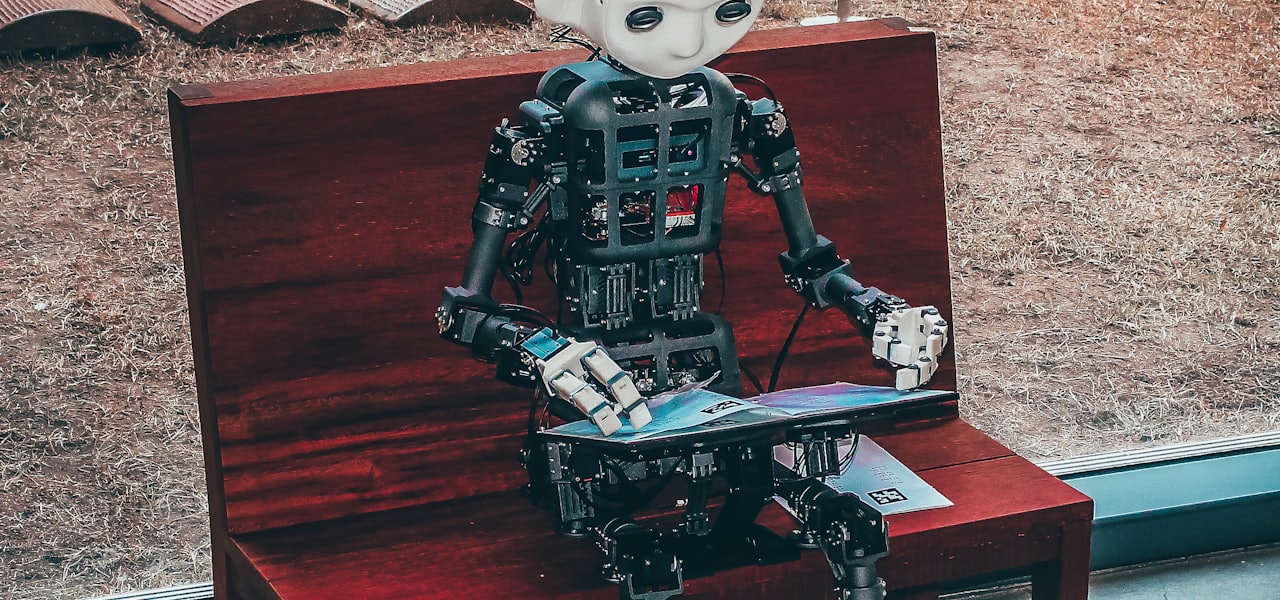
The impact of artificial intelligence on workers includes both applications to improve worker safety and health, and potential hazards that must be controlled. One potential application is using AI to eliminate hazards by removing humans from hazardous situations that involve risk of stress, overwork, or musculoskeletal injuries. Predictive analytics may also be used to identify conditions that may lead to hazards such as fatigue, repetitive strain injuries, or toxic substance exposure, leading to earlier interventions. Another is to streamline workplace safety and health workflows through automating repetitive tasks, enhancing safety training programs through virtual reality, or detecting and reporting near misses. When used in the workplace, AI also presents the possibility of new hazards. These may arise from machine learning techniques leading to unpredictable behavior and inscrutability in their decision-making, or from cybersecurity and information privacy issues. Many hazards of AI are psychosocial due to its potential to cause changes in work organization. These include increased monitoring leading to micromanagement, algorithms unintentionally or intentionally mimicking undesirable human biases, and assigning blame for machine errors to the human operator instead. AI may also lead to physical hazards in the form of human–robot collisions, and ergonomic risks of control interfaces and human–machine interactions. Hazard controls include cybersecurity and information privacy measures, communication and transparency with workers about data usage, and limitations on collaborative robots. From a workplace safety and health perspective, only "weak" or "narrow" AI that is tailored to a specific task is relevant, as there are many examples that are currently in use or expected to come into use in the near future. Certain digital technologies are predicted to result in job losses. Starting in the 2020s, the adoption of modern robotics has led to net employment growth. However, many businesses anticipate that automation, or employing robots would result in job losses in the future. This is especially true for companies in Central and Eastern Europe. Other digital technologies, such as platforms or big data, are projected to have a more neutral impact on employment. A large number of tech workers have been laid off starting in 2023; many such job cuts have been attributed to artificial intelligence. == Health and safety applications == In order for any potential AI health and safety application to be adopted, it requires acceptance by both managers and workers. For example, worker acceptance may be diminished by concerns about information privacy, or from a lack of trust and acceptance of the new technology, which may arise from inadequate transparency or training. Alternatively, managers may emphasize increases in economic productivity rather than gains in worker safety and health when implementing AI-based systems. === Eliminating hazardous tasks === AI may increase the scope of work tasks where a worker can be removed from a situation that carries risk. In a sense, while traditional automation can replace the functions of a worker's body with a robot, AI effectively replaces the functions of their brain with a computer. Hazards that can be avoided include stress, overwork, musculoskeletal injuries, and boredom. This can expand the range of affected job sectors into white-collar and service sector jobs such as in medicine, finance, and information technology. === Analytics to reduce risk === Machine learning is used for people analytics to make predictions about worker behavior to assist management decision-making, such as hiring and performance assessment. These could also be used to improve worker health. The analytics may be based on inputs such as online activities, monitoring of communications, location tracking, and voice analysis and body language analysis of filmed interviews. For example, sentiment analysis may be used to spot fatigue to prevent overwork. Decision support systems have a similar ability to be used to, for example, prevent industrial disasters or make disaster response more efficient. For manual material handling workers, predictive analytics and artificial intelligence may be used to reduce musculoskeletal injury. Traditional guidelines are based on statistical averages and are geared towards anthropometrically typical humans. The analysis of large amounts of data from wearable sensors may allow real-time, personalized calculation of ergonomic risk and fatigue management, as well as better analysis of the risk associated with specific job roles. Wearable sensors may also enable earlier intervention against exposure to toxic substances than is possible with area or breathing zone testing on a periodic basis. Furthermore, the large data sets generated could improve workplace health surveillance, risk assessment, and research. === Streamlining safety and health workflows === AI has also been used to attempt to make the workplace safety and health workflow more efficient. One example is coding of workers' compensation claims, which are submitted in a prose narrative form and must manually be assigned standardized codes. AI is being investigated to perform this task faster, more cheaply, and with fewer errors. == Hazards == There are several broad aspects of AI that may give rise to specific hazards. The risks depend on implementation rather than the mere presence of AI. Systems using sub-symbolic AI such as machine learning may behave unpredictably and are more prone to inscrutability in their decision-making. This is especially true if a situation is encountered that was not part of the AI's training dataset, and is exacerbated in environments that are less structured. Undesired behavior may also arise from flaws in the system's perception (arising either from within the software or from sensor degradation), knowledge representation and reasoning, or from software bugs. They may arise from improper training, such as a user applying the same algorithm to two problems that do not have the same requirements. Machine learning applied during the design phase may have different implications than that applied at runtime. Systems using symbolic AI are less prone to unpredictable behavior. The use of AI also increases cybersecurity risks relative to platforms that do not use AI, and information privacy concerns about collected data may pose a hazard to workers. === Psychosocial === Psychosocial hazards are those that arise from the way work is designed, organized, and managed, or its economic and social contexts, rather than arising from a physical substance or object. They cause not only psychiatric and psychological outcomes such as occupational burnout, anxiety disorders, and depression, but they can also cause physical injury or illness such as cardiovascular disease or musculoskeletal injury. Many hazards of AI are psychosocial in nature due to its potential to cause changes in work organization, in terms of increasing complexity and interaction between different organizational factors. However, psychosocial risks are often overlooked by designers of advanced manufacturing systems. Einola and Khoreva explore how different organizational groups perceive and interact with AI technologies. Their research shows that successful AI integration depends on human ownership and contextual understanding. They caution against blind technological optimism and stress the importance of tailoring AI use to specific workplace ecosystems. This perspective reinforces the need for inclusive design and transparent implementation strategies. ==== Changes in work practices ==== Over-reliance on AI tools may lead to deskilling of some professions. When AI becomes a substitute for traditional peer collaboration and mentorship, there is a risk of diminishing opportunities for interpersonal skill development and team-based learning. Increased monitoring may lead to micromanagement and thus to stress and anxiety. A perception of surveillance may also lead to stress. Controls for these include consultation with worker groups, extensive testing, and attention to introduced bias. Wearable sensors, activity trackers, and augmented reality may also lead to stress from micromanagement, both for assembly line workers and gig workers. Gig workers also lack the legal protections and rights of formal workers. Newell & Marabelli argue that AI alters power dynamics and employee autonomy, requiring a more nuanced understanding of its social and organizational implications. There is also the risk of people being forced to work at a robot's pace, or to monitor robot performance at nonstandard hours. A 2025 preprint paper based on users' interactions with the AI chatbot Microsoft Copilot identified forty jobs that the author's claimed had high overlaps with the capabilities of AI. Some media outlets used this paper to report on jobs becoming obsolete. Cri
Spike-and-slab regression
Spike-and-slab regression is a type of Bayesian linear regression in which a particular hierarchical prior distribution for the regression coefficients is chosen such that only a subset of the possible regressors is retained. The technique is particularly useful when the number of possible predictors is larger than the number of observations. The idea of the spike-and-slab model was originally proposed by Mitchell & Beauchamp (1988). The approach was further significantly developed by Madigan & Raftery (1994) and George & McCulloch (1997). A recent and important contribution to this literature is Ishwaran & Rao (2005). == Model description == Suppose we have P possible predictors in some model. Vector γ has a length equal to P and consists of zeros and ones. This vector indicates whether a particular variable is included in the regression or not. If no specific prior information on initial inclusion probabilities of particular variables is available, a Bernoulli prior distribution is a common default choice. Conditional on a predictor being in the regression, we identify a prior distribution for the model coefficient, which corresponds to that variable (β). A common choice on that step is to use a normal prior with a mean equal to zero and a large variance calculated based on ( X T X ) − 1 {\displaystyle (X^{T}X)^{-1}} (where X {\displaystyle X} is a design matrix of explanatory variables of the model). A draw of γ from its prior distribution is a list of the variables included in the regression. Conditional on this set of selected variables, we take a draw from the prior distribution of the regression coefficients (if γi = 1 then βi ≠ 0 and if γi = 0 then βi = 0). βγ denotes the subset of β for which γi = 1. In the next step, we calculate a posterior probability for both inclusion and coefficients by applying a standard statistical procedure. All steps of the described algorithm are repeated thousands of times using the Markov chain Monte Carlo (MCMC) technique. As a result, we obtain a posterior distribution of γ (variable inclusion in the model), β (regression coefficient values) and the corresponding prediction of y. The model got its name (spike-and-slab) due to the shape of the two prior distributions. The "spike" is the probability of a particular coefficient in the model to be zero. The "slab" is the prior distribution for the regression coefficient values. An advantage of Bayesian variable selection techniques is that they are able to make use of prior knowledge about the model. In the absence of such knowledge, some reasonable default values can be used; to quote Scott and Varian (2013): "For the analyst who prefers simplicity at the cost of some reasonable assumptions, useful prior information can be reduced to an expected model size, an expected R2, and a sample size ν determining the weight given to the guess at R2." Some researchers suggest the following default values: R2 = 0.5, ν = 0.01, and π = 0.5 (parameter of a prior Bernoulli distribution).
SimSimi
SimSimi is an artificial intelligence conversation program created in 2002 by ISMaker. It grows its artificial intelligence day by day assisted by a feature that allows users to teach it to respond correctly. SimSimi, pronounced as "shim-shimi", is from a Korean word simsim (심심) which means "bored". It has an application designed for Android, Windows Phone and iOS. The application was banned in Thailand in 2012 after users taught it to make responses containing profanity, and to criticise leading politicians. In April 2018, SimSimi was suspended in Brazil due to accusations of sending inappropriate messages, such as sexual language, bullying and even death threats, being labeled as "dangerous" mainly due to its popularity among children, and according to its developer, the suspension of the app in the country "was inevitable because the SimSimi app, at least in the last few days, had a significant negative social impact in Brazil.”
A Logical Calculus of the Ideas Immanent in Nervous Activity
"A Logical Calculus of the Ideas Immanent in Nervous Activity" is a 1943 paper written by Warren Sturgis McCulloch and Walter Pitts, published in the journal The Bulletin of Mathematical Biophysics. The paper proposed a mathematical model of the nervous system as a network of simple logical elements, later known as artificial neurons, or McCulloch–Pitts neurons. These neurons receive inputs, perform a weighted sum, and fire an output signal based on a threshold function. By connecting these units in various configurations, McCulloch and Pitts demonstrated that their model could perform all logical functions. It is a seminal work in cognitive science, computational neuroscience, computer science, and artificial intelligence. It was a foundational result in automata theory. John von Neumann cited it as a significant result. == Mathematics == The artificial neuron used in the original paper is slightly different from the modern version. They considered neural networks that operate in discrete steps of time t = 0 , 1 , … {\displaystyle t=0,1,\dots } . The neural network contains a number of neurons. Let the state of a neuron i {\displaystyle i} at time t {\displaystyle t} be N i ( t ) {\displaystyle N_{i}(t)} . The state of a neuron can either be 0 or 1, standing for "not firing" and "firing". Each neuron also has a firing threshold θ {\displaystyle \theta } , such that it fires if the total input exceeds the threshold. Each neuron can connect to any other neuron (including itself) with positive synapses (excitatory) or negative synapses (inhibitory). That is, each neuron can connect to another neuron with a weight w {\displaystyle w} taking an integer value. A peripheral afferent is a neuron with no incoming synapses. We can regard each neural network as a directed graph, with the nodes being the neurons, and the directed edges being the synapses. A neural network has a circle or a circuit if there exists a directed circle in the graph. Let w i j ( t ) {\displaystyle w_{ij}(t)} be the connection weight from neuron j {\displaystyle j} to neuron i {\displaystyle i} at time t {\displaystyle t} , then its next state is N i ( t + 1 ) = H ( ∑ j = 1 n w i j ( t ) N j ( t ) − θ i ( t ) ) , {\displaystyle N_{i}(t+1)=H\left(\sum _{j=1}^{n}w_{ij}(t)N_{j}(t)-\theta _{i}(t)\right),} where H {\displaystyle H} is the Heaviside step function (outputting 1 if the input is greater than or equal to 0, and 0 otherwise). === Symbolic logic === The paper used, as a logical language for describing neural networks, "Language II" from The Logical Syntax of Language by Rudolf Carnap with some notations taken from Principia Mathematica by Alfred North Whitehead and Bertrand Russell. Language II covers substantial parts of classical mathematics, including real analysis and portions of set theory. To describe a neural network with peripheral afferents N 1 , N 2 , … , N p {\displaystyle N_{1},N_{2},\dots ,N_{p}} and non-peripheral afferents N p + 1 , N p + 2 , … , N n {\displaystyle N_{p+1},N_{p+2},\dots ,N_{n}} they considered logical predicate of form P r ( N 1 , N 2 , … , N p , t ) {\displaystyle Pr(N_{1},N_{2},\dots ,N_{p},t)} where P r {\displaystyle Pr} is a first-order logic predicate function (a function that outputs a boolean), N 1 , … , N p {\displaystyle N_{1},\dots ,N_{p}} are predicates that take t {\displaystyle t} as an argument, and t {\displaystyle t} is the only free variable in the predicate. Intuitively speaking, N 1 , … , N p {\displaystyle N_{1},\dots ,N_{p}} specifies the binary input patterns going into the neural network over all time, and P r ( N 1 , N 2 , … , N n , t ) {\displaystyle Pr(N_{1},N_{2},\dots ,N_{n},t)} is a function that takes some binary input patterns, and constructs an output binary pattern P r ( N 1 , N 2 , … , N n , 0 ) , P r ( N 1 , N 2 , … , N n , 1 ) , … {\displaystyle Pr(N_{1},N_{2},\dots ,N_{n},0),Pr(N_{1},N_{2},\dots ,N_{n},1),\dots } . A logical sentence P r ( N 1 , N 2 , … , N n , t ) {\displaystyle Pr(N_{1},N_{2},\dots ,N_{n},t)} is realized by a neural network iff there exists a time-delay T ≥ 0 {\displaystyle T\geq 0} , a neuron i {\displaystyle i} in the network, and an initial state for the non-peripheral neurons N p + 1 ( 0 ) , … , N n ( 0 ) {\displaystyle N_{p+1}(0),\dots ,N_{n}(0)} , such that for any time t {\displaystyle t} , the truth-value of the logical sentence is equal to the state of the neuron i {\displaystyle i} at time t + T {\displaystyle t+T} . That is, ∀ t = 0 , 1 , 2 , … , P r ( N 1 , N 2 , … , N p , t ) = N i ( t + T ) {\displaystyle \forall t=0,1,2,\dots ,\quad Pr(N_{1},N_{2},\dots ,N_{p},t)=N_{i}(t+T)} === Equivalence === In the paper, they considered some alternative definitions of artificial neural networks, and have shown them to be equivalent, that is, neural networks under one definition realizes precisely the same logical sentences as neural networks under another definition. They considered three forms of inhibition: relative inhibition, absolute inhibition, and extinction. The definition above is relative inhibition. By "absolute inhibition" they meant that if any negative synapse fires, then the neuron will not fire. By "extinction" they meant that if at time t {\displaystyle t} , any inhibitory synapse fires on a neuron i {\displaystyle i} , then θ i ( t + j ) = θ i ( 0 ) + b j {\displaystyle \theta _{i}(t+j)=\theta _{i}(0)+b_{j}} for j = 1 , 2 , 3 , … {\displaystyle j=1,2,3,\dots } , until the next time an inhibitory synapse fires on i {\displaystyle i} . It is required that b j = 0 {\displaystyle b_{j}=0} for all large j {\displaystyle j} . Theorem 4 and 5 state that these are equivalent. They considered three forms of excitation: spatial summation, temporal summation, and facilitation. The definition above is spatial summation (which they pictured as having multiple synapses placed close together, so that the effect of their firing sums up). By "temporal summation" they meant that the total incoming signal is ∑ τ = 0 T ∑ j = 1 n w i j ( t ) N j ( t − τ ) {\displaystyle \sum _{\tau =0}^{T}\sum _{j=1}^{n}w_{ij}(t)N_{j}(t-\tau )} for some T ≥ 1 {\displaystyle T\geq 1} . By "facilitation" they meant the same as extinction, except that b j ≤ 0 {\displaystyle b_{j}\leq 0} . Theorem 6 states that these are equivalent. They considered neural networks that do not change, and those that change by Hebbian learning. That is, they assume that at t = 0 {\displaystyle t=0} , some excitatory synaptic connections are not active. If at any t {\displaystyle t} , both N i ( t ) = 1 , N j ( t ) = 1 {\displaystyle N_{i}(t)=1,N_{j}(t)=1} , then any latent excitatory synapse between i , j {\displaystyle i,j} becomes active. Theorem 7 states that these are equivalent. === Logical expressivity === They considered "temporal propositional expressions" (TPE), which are propositional formulas with one free variable t {\displaystyle t} . For example, N 1 ( t ) ∨ N 2 ( t ) ∧ ¬ N 3 ( t ) {\displaystyle N_{1}(t)\vee N_{2}(t)\wedge \neg N_{3}(t)} is such an expression. Theorem 1 and 2 together showed that neural nets without circles are equivalent to TPE. For neural nets with loops, they noted that "realizable P r {\displaystyle Pr} may involve reference to past events of an indefinite degree of remoteness". These then encodes for sentences like "There was some x such that x was a ψ" or ( ∃ x ) ( ψ x ) {\displaystyle (\exists x)(\psi x)} . Theorems 8 to 10 showed that neural nets with loops can encode all first-order logic with equality and conversely, any looped neural networks is equivalent to a sentence in first-order logic with equality, thus showing that they are equivalent in logical expressiveness. As a remark, they noted that a neural network, if furnished with a tape, scanners, and write-heads, is equivalent to a Turing machine, and conversely, every Turing machine is equivalent to some such neural network. Thus, these neural networks are equivalent to Turing computability and Church's lambda-definability. == Context == === Previous work === The paper built upon several previous strands of work. In the symbolic logic side, it built on the previous work by Carnap, Whitehead, and Russell. This was contributed by Walter Pitts, who had a strong proficiency with symbolic logic. Pitts provided mathematical and logical rigor to McCulloch’s vague ideas on psychons (atoms of psychological events) and circular causality. In the neuroscience side, it built on previous work by the mathematical biology research group centered around Nicolas Rashevsky, of which McCulloch was a member. The paper was published in the Bulletin of Mathematical Biophysics, which was founded by Rashevsky in 1939. During the late 1930s, Rashevsky's research group was producing papers that had difficulty publishing in other journals at the time, so Rashevsky decided to found a new journal exclusively devoted to mathematical biophysics. Also in the Rashevsky's group was Alston Scott Householder, who in 1941 published an abstract model