AI Video Tools

Explore the best AI Video Tools — independent reviews, comparisons, pricing and step-by-step how-to guides, curated by Aizhi.

  • GasBuddy

    GasBuddy

    GasBuddy is a technology company headquartered in Dallas, United States, that offers mobile applications and websites for tracking crowd-sourced locations and prices of gas stations and convenience stores in the United States and Canada. Their platforms offer information sourced from users, gas station operators, and partner companies. They also provide business-to-business services to gas stations and convenience store owners. == History == GasBuddy was founded in Minneapolis in 2000 by Dustin Coupal, Jason Toews as a community website for sharing gas prices. In 2004, they filed as a for-profit corporation in Minnesota under the name GasBuddy Organization Inc. In 2009, GasBuddy launched OpenStore, a platform that allows convenience stores to build and manage their own mobile apps. In 2010, the company launched its own mobile apps that allowed users to input gas prices from their smartphones. In 2013, Oil Price Information Service (OPIS), a subsidiary of UCG, acquired GasBuddy. OPIS is a provider of petroleum pricing and news for businesses. In 2016, IHS acquired OPIS, separating from GasBuddy, which remained with UCG as a subsidiary company. Initially only available in the United States and Canada, GasBuddy launched in Australia in March 2016. Also in that year, GasBuddy released a completely redesigned app, its first major redesign since its release in 2010. GasBuddy also unveiled a new logo and launched GasBuddy Business Pages. GasBuddy shut down the Australian version of their app in 2022. In 2017, GasBuddy launched a gas savings program titled "Pay with GasBuddy" intended to let consumers save at gas stations in the United States. In the same year, GasBuddy was involved in a lawsuit with Reveal Mobile, a location-based marketing company, over the sale of user location data. It was revealed that GasBuddy sold information on more than 4.5 million users to Reveal each month for $9.50 per 1000 users. According to CNET, that information included "users' latitude, longitude, IP address, and time stamps on the data collected," which sparked concern in the media and between its users. In 2021, the GasBuddy app rose to the most popular app on both Android and iPhone platforms in the wake of the Colonial Pipeline ransomware attack PDI acquired GasBuddy in 2021.

    Read more →
  • Neural network Gaussian process

    Neural network Gaussian process

    A Neural Network Gaussian Process (NNGP) is a Gaussian process (GP) obtained as the limit of a certain type of sequence of neural networks. Specifically, a wide variety of network architectures converges to a GP in the infinitely wide limit, in the sense of distribution. The concept constitutes an intensional definition, i.e., a NNGP is just a GP, but distinguished by how it is obtained. == Motivation == Bayesian networks are a modeling tool for assigning probabilities to events, and thereby characterizing the uncertainty in a model's predictions. Deep learning and artificial neural networks are approaches used in machine learning to build computational models which learn from training examples. Bayesian neural networks merge these fields. They are a type of neural network whose parameters and predictions are both probabilistic. While standard neural networks often assign high confidence even to incorrect predictions, Bayesian neural networks can more accurately evaluate how likely their predictions are to be correct. Computation in artificial neural networks is usually organized into sequential layers of artificial neurons. The number of neurons in a layer is called the layer width. When we consider a sequence of Bayesian neural networks with increasingly wide layers (see figure), they converge in distribution to a NNGP. This large width limit is of practical interest, since the networks often improve as layers get wider. And the process may give a closed form way to evaluate networks. NNGPs also appears in several other contexts: It describes the distribution over predictions made by wide non-Bayesian artificial neural networks after random initialization of their parameters, but before training; it appears as a term in neural tangent kernel prediction equations; it is used in deep information propagation to characterize whether hyperparameters and architectures will be trainable. It is related to other large width limits of neural networks. === Scope === The first correspondence result had been established in the 1995 PhD thesis of Radford M. Neal, then supervised by Geoffrey Hinton at University of Toronto. Neal cites David J. C. MacKay as inspiration, who worked in Bayesian learning. Today the correspondence is proven for: Single hidden layer Bayesian neural networks; deep fully connected networks as the number of units per layer is taken to infinity; convolutional neural networks as the number of channels is taken to infinity; transformer networks as the number of attention heads is taken to infinity; recurrent networks as the number of units is taken to infinity. In fact, this NNGP correspondence holds for almost any architecture: Generally, if an architecture can be expressed solely via matrix multiplication and coordinatewise nonlinearities (i.e., a tensor program), then it has an infinite-width GP. This in particular includes all feedforward or recurrent neural networks composed of multilayer perceptron, recurrent neural networks (e.g., LSTMs, GRUs), (nD or graph) convolution, pooling, skip connection, attention, batch normalization, and/or layer normalization. === Illustration === Every setting of a neural network's parameters θ {\displaystyle \theta } corresponds to a specific function computed by the neural network. A prior distribution p ( θ ) {\displaystyle p(\theta )} over neural network parameters therefore corresponds to a prior distribution over functions computed by the network. As neural networks are made infinitely wide, this distribution over functions converges to a Gaussian process for many architectures. The notation used in this section is the same as the notation used below to derive the correspondence between NNGPs and fully connected networks, and more details can be found there. The figure to the right plots the one-dimensional outputs z L ( ⋅ ; θ ) {\displaystyle z^{L}(\cdot ;\theta )} of a neural network for two inputs x {\displaystyle x} and x ∗ {\displaystyle x^{}} against each other. The black dots show the function computed by the neural network on these inputs for random draws of the parameters from p ( θ ) {\displaystyle p(\theta )} . The red lines are iso-probability contours for the joint distribution over network outputs z L ( x ; θ ) {\displaystyle z^{L}(x;\theta )} and z L ( x ∗ ; θ ) {\displaystyle z^{L}(x^{};\theta )} induced by p ( θ ) {\displaystyle p(\theta )} . This is the distribution in function space corresponding to the distribution p ( θ ) {\displaystyle p(\theta )} in parameter space, and the black dots are samples from this distribution. For infinitely wide neural networks, since the distribution over functions computed by the neural network is a Gaussian process, the joint distribution over network outputs is a multivariate Gaussian for any finite set of network inputs. == Discussion == === Infinitely wide fully connected network === This section expands on the correspondence between infinitely wide neural networks and Gaussian processes for the specific case of a fully connected architecture. It provides a proof sketch outlining why the correspondence holds, and introduces the specific functional form of the NNGP for fully connected networks. The proof sketch closely follows the approach by Novak and coauthors. ==== Network architecture specification ==== Consider a fully connected artificial neural network with inputs x {\displaystyle x} , parameters θ {\displaystyle \theta } consisting of weights W l {\displaystyle W^{l}} and biases b l {\displaystyle b^{l}} for each layer l {\displaystyle l} in the network, pre-activations (pre-nonlinearity) z l {\displaystyle z^{l}} , activations (post-nonlinearity) y l {\displaystyle y^{l}} , pointwise nonlinearity ϕ ( ⋅ ) {\displaystyle \phi (\cdot )} , and layer widths n l {\displaystyle n^{l}} . For simplicity, the width n L + 1 {\displaystyle n^{L+1}} of the readout vector z L {\displaystyle z^{L}} is taken to be 1. The parameters of this network have a prior distribution p ( θ ) {\displaystyle p(\theta )} , which consists of an isotropic Gaussian for each weight and bias, with the variance of the weights scaled inversely with layer width. This network is illustrated in the figure to the right, and described by the following set of equations: x ≡ input y l ( x ) = { x l = 0 ϕ ( z l − 1 ( x ) ) l > 0 z i l ( x ) = ∑ j W i j l y j l ( x ) + b i l W i j l ∼ N ( 0 , σ w 2 n l ) b i l ∼ N ( 0 , σ b 2 ) ϕ ( ⋅ ) ≡ nonlinearity y l ( x ) , z l − 1 ( x ) ∈ R n l × 1 n L + 1 = 1 θ = { W 0 , b 0 , … , W L , b L } {\displaystyle {\begin{aligned}x&\equiv {\text{input}}\\y^{l}(x)&=\left\{{\begin{array}{lcl}x&&l=0\\\phi \left(z^{l-1}(x)\right)&&l>0\end{array}}\right.\\z_{i}^{l}(x)&=\sum _{j}W_{ij}^{l}y_{j}^{l}(x)+b_{i}^{l}\\W_{ij}^{l}&\sim {\mathcal {N}}\left(0,{\frac {\sigma _{w}^{2}}{n^{l}}}\right)\\b_{i}^{l}&\sim {\mathcal {N}}\left(0,\sigma _{b}^{2}\right)\\\phi (\cdot )&\equiv {\text{nonlinearity}}\\y^{l}(x),z^{l-1}(x)&\in \mathbb {R} ^{n^{l}\times 1}\\n^{L+1}&=1\\\theta &=\left\{W^{0},b^{0},\dots ,W^{L},b^{L}\right\}\end{aligned}}} ==== ==== z l | y l {\displaystyle z^{l}|y^{l}} is a Gaussian process We first observe that the pre-activations z l {\displaystyle z^{l}} are described by a Gaussian process conditioned on the preceding activations y l {\displaystyle y^{l}} . This result holds even at finite width. Each pre-activation z i l {\displaystyle z_{i}^{l}} is a weighted sum of Gaussian random variables, corresponding to the weights W i j l {\displaystyle W_{ij}^{l}} and biases b i l {\displaystyle b_{i}^{l}} , where the coefficients for each of those Gaussian variables are the preceding activations y j l {\displaystyle y_{j}^{l}} . Because they are a weighted sum of zero-mean Gaussians, the z i l {\displaystyle z_{i}^{l}} are themselves zero-mean Gaussians (conditioned on the coefficients y j l {\displaystyle y_{j}^{l}} ). Since the z l {\displaystyle z^{l}} are jointly Gaussian for any set of y l {\displaystyle y^{l}} , they are described by a Gaussian process conditioned on the preceding activations y l {\displaystyle y^{l}} . The covariance or kernel of this Gaussian process depends on the weight and bias variances σ w 2 {\displaystyle \sigma _{w}^{2}} and σ b 2 {\displaystyle \sigma _{b}^{2}} , as well as the second moment matrix K l {\displaystyle K^{l}} of the preceding activations y l {\displaystyle y^{l}} , z i l ∣ y l ∼ G P ( 0 , σ w 2 K l + σ b 2 ) K l ( x , x ′ ) = 1 n l ∑ i y i l ( x ) y i l ( x ′ ) {\displaystyle {\begin{aligned}z_{i}^{l}\mid y^{l}&\sim {\mathcal {GP}}\left(0,\sigma _{w}^{2}K^{l}+\sigma _{b}^{2}\right)\\K^{l}(x,x')&={\frac {1}{n^{l}}}\sum _{i}y_{i}^{l}(x)y_{i}^{l}(x')\end{aligned}}} The effect of the weight scale σ w 2 {\displaystyle \sigma _{w}^{2}} is to rescale the contribution to the covariance matrix from K l {\displaystyle K^{l}} , while the bias is shared for all inputs, and so σ b 2 {\displaystyle \sigma _{b}^{2}} makes the z i l {\displaystyle z_{i}^{l}} for different datapoints more similar and

    Read more →
  • Huawei Mobile Services

    Huawei Mobile Services

    Huawei Mobile Services (HMS) is a collection of proprietary services and high level application programming interfaces (APIs) developed by Huawei Technologies Co., Ltd. Its hub known as HMS Core serves as a toolkit for app development on Huawei devices. HMS is typically installed on Huawei devices on top of running HarmonyOS 4.x and earlier operating system on its earlier devices running the Android operating system with EMUI including devices already distributed with Google Mobile Services. Alongside, HMS Core Wear Engine for Android phones with lightweight based LiteOS wearable middleware app framework integration connectivity like notifications, status etc. HMS consists of seven key services and the HMS Core. The key services are Huawei ID, Huawei Cloud, AppGallery, Themes, Huawei Video, Browser, and Assistant. The web browser is based on Chromium. Huawei Quick Apps is the alternative to Google Instant Apps. By January 2020, over 50,000 apps had been integrated with HMS Core. Its rival, Google Mobile Services has 3 million apps on Google's Play Store. The AppGallery claimed 180 billion downloads in 2019. In March 2020, HMS was used by 650 million monthly active users across 170 countries. A Chinese phone manufacturer, LeTV, hosted a smartphone business communication meeting in Beijing on September 27, 2021, to demonstrate its phone, the LeTV S1. This was the first smartphone from a third-party manufacturer to include Huawei Mobile Services (HMS). == HMS on Android and HarmonyOS == Huawei Mobile Services on Android goes all the way back to August 2016 as Huawei ID services for phones, basic functionalities for Huawei P9 series. However, in May 2019 proved to be a significant change to HMS when Google was prohibited from working with Huawei on any new devices extending ecosystem for AppGallery store front launched in April 2018, year prior. This also included bundling Google's Apps, including Gmail, Maps and YouTube. Any new Huawei devices launched after 16 May 2019 were unable to receive updates from Google services and would be considered 'uncertified' meaning Huawei's only solution at the time was to turn HMS into a genuine competitor to Google and incentivize app developers to utilize the platform. Huawei officially launched Huawei Mobile Services in China on December 24, 2019, as a beta. Huawei expanded Huawei Mobile Services in Europe in February 2020 and other markets in Asia, Latin America, Middle East & Africa, Canada, Mexico followed outside banned US market. HMS is available on the Honor 9X Pro, View 30 Pro, Huawei Mate XS. HMS is also available, alongside GMS, on many other Huawei models launched before the ban. Huawei promised developers it would take, “less than 10 minutes", to port their app over to HMS - to illustrate the ease of portability between Google's Play Store and the HMS AppGallery. On January 15, 2020, HMS Core 4.0 (Huawei Mobile Services Core 4.0) was officially launched. Huawei announced that at this time, there were already 1.3 million developers and 55,000 applications on board. The next day, Huawei held a developer day event in London and invested £20 million to encourage developers in the United Kingdom and Ireland to use HMS. On July 15, 2021, Huawei expanded HMS with classic HarmonyOS dual-framework that provided Java support and eventually with JavaScript and ArkTS (eTS) language support with HMS Core 6.0 for app development with primarily Android apps, alongside limited HAP imperative developed based apps that shares AOSP file system libraries in all types of devices from smartphones, tablets, smart screens, smartwatches, and car machines. Including various third-party development frameworks, such as React Native, Cordova, etc. At HDC 2023, Huawei unveiled HarmonyOS 5, marking a total break from the hybrid Android derived platform. This shift replaced the legacy Android and classic HarmonyOS-based HMS SDK with a full native API developer kit SDK built solely on OpenHarmony. The architecture moved from middleware services to vertical integration path. In this new model, HMS Core libraries are no longer external add-ons but are bundled directly into the system and DevEco Studio as native HarmonyOS Kits. == HMS Core == HMS Core is a hub for Huawei Mobile Services and serves as a toolkit for app development on Huawei devices. The core comprises Development, Growth and Monetizing and was created as a replacement for Google Mobile Services (GMS) Core. HMS core services were available in more than 55,000 apps in June 2020; HMS Core 5.0 debuted in September 2020. HMS Core 6.0 was launched in June 2021 with extended support for Huawei Cloud services. In June 2021, the number of registered developers within the HMS ecosystem was 4 million, and the number of apps integrated with the HMS Core had reached 134,000. As of July 2022, registered developers within HMS ecosystem had grown to 5 million, and the number of apps integrated with the HMS Core reached 203,000. The number of apps had grown to 220,000 by 30 September 2022. == AppGallery == The AppGallery has a key rival, Google's Play Store on Android. The AppGallery is available in 170 countries, across 78 languages. == Reception == The reception of HMS is mixed, with the majority of discussion based around the key Google/Android apps which are not yet present on the AppGallery and whether or not this presents a significant problem to users. The open development of HMS Core has been regarded by some as benefiting the Android project as a whole, "If Huawei continues to invest in a holistically open approach ... the result could be that we could all end up a bit less beholden to Google".

    Read more →
  • Virtual Woman

    Virtual Woman

    Virtual Woman is a software program that has elements of a chatbot, virtual reality, artificial intelligence, a video game, and a virtual human. It claims to be the oldest form of virtual life in existence, as it has been distributed since the late 1980s. Recent releases of the program can update their intelligence by connecting online and downloading newer personalities and histories. == Program play == When Virtual Woman starts, the user is presented with a list of options and then may choose their Virtual Woman's ethnic type, personality, location, clothing, etc. or load a pre-built Virtual Woman from a Digital DNA file. Once the options are determined, the user is presented with a 3-D animated Virtual Woman of their selection and then can engage them in conversation, progressing in a manner similar to that of its predecessor, ELIZA and its successors, the chatbots. In most versions of Virtual Woman, this is done through the keyboard, but some versions also support voice input. == In popular culture == Software sales and usage statistics from private companies are difficult to verify. WinSite, an independent Internet shareware distribution site that does publish public download counts, has for some time now listed some version of Virtual Woman in their top three shareware downloads of all time with well over seven hundred thousand downloads. == Compadre == The group of beta testers and advisers for Virtual Woman are referred to as Compadre and have their own beta testing site and forum. == Criticisms == As Virtual Woman has developed the ability to conduct longer and more realistic interactions, particularly in recent beta releases, criticism has arisen that this may lead some users to social isolation, or to use the program as a substitute for real human interaction. However, these are criticisms that have been leveled at all video games and at the use of the Internet itself. == Release history == Versions of Virtual Woman with rough release dates and PC platforms for which they were designed: Virtual Woman (????) (DOS) Virtual Woman for Windows (1991) (Windows 3.0) Virtual Woman 95 (1995) (Windows 3X, Windows 95) Virtual Woman 98 (1998) (Windows 3X, Windows 95) Virtual Woman 2000 (2000) (Windows 95+) Virtual Woman Millennium (Windows 95, XP) Virtual Woman Net ( Windows XP/Vista specific)

    Read more →
  • Floyd–Steinberg dithering

    Floyd–Steinberg dithering

    Floyd–Steinberg dithering is an image dithering algorithm first published in 1976 by Robert W. Floyd and Louis Steinberg. It is commonly used by image manipulation software, for example, when converting an image from a Truecolor 24-bit PNG format into a GIF format, which is restricted to a maximum of 256 colors. == Implementation == The algorithm achieves dithering using error diffusion, meaning it pushes (adds) the residual quantization error of a pixel onto its neighboring pixels, to be quantized after. It spreads the debt out according to the distribution (shown as a map of the neighboring pixels): [ ∗ 7 16 … … 3 16 5 16 1 16 … ] {\displaystyle {\begin{bmatrix}&&&{\frac {\displaystyle 7}{\displaystyle 16}}&\ldots \\\ldots &{\frac {\displaystyle 3}{\displaystyle 16}}&{\frac {\displaystyle 5}{\displaystyle 16}}&{\frac {\displaystyle 1}{\displaystyle 16}}&\ldots \\\end{bmatrix}}} The pixel indicated with a star () indicates the pixel currently being scanned, and the blank pixels are the previously scanned pixels. The specific values (7/16, 3/16, 5/16, 1/16) were originally found by trial-and-error, "guided by the desire to have a region of desired density 0.5 come out as a checkerboard pattern". The algorithm scans the image from left to right, top to bottom, quantizing pixel values one by one. Each time, the quantization error is transferred to the neighboring pixels, while not affecting the pixels that already have been quantized. Hence, if a number of pixels have been rounded downwards, it becomes more likely that the next pixel is rounded upwards, such that on average, the quantization error is close to zero. The diffusion coefficients have the property that if the original pixel values are exactly halfway in between the nearest available colors, the dithered result is a checkerboard pattern. For example, 50% grey data could be dithered as a black-and-white checkerboard pattern. For optimal dithering, the counting of quantization errors should be in sufficient accuracy to prevent rounding errors from affecting the result. For correct results, all values should be linearized first, rather than operating directly on sRGB values as is common for images stored on computers. In some implementations, the horizontal direction of scan alternates between lines; this is called "serpentine scanning" or boustrophedon transform dithering. The algorithm described above is in the following pseudocode. This works for any approximately linear encoding of pixel values, such as 8-bit integers, 16-bit integers or real numbers in the range [0, 1]. for each y from top to bottom do for each x from left to right do oldpixel := pixels[x][y] newpixel := find_closest_palette_color(oldpixel) pixels[x][y] := newpixel quant_error := oldpixel - newpixel pixels[x + 1][y ] := pixels[x + 1][y ] + quant_error × 7 / 16 pixels[x - 1][y + 1] := pixels[x - 1][y + 1] + quant_error × 3 / 16 pixels[x ][y + 1] := pixels[x ][y + 1] + quant_error × 5 / 16 pixels[x + 1][y + 1] := pixels[x + 1][y + 1] + quant_error × 1 / 16 When converting grayscale pixel values from a high to a low bit depth (e.g. 8-bit grayscale to 1-bit black-and-white), find_closest_palette_color() may perform just a simple rounding, for example: find_closest_palette_color(oldpixel) = round(oldpixel / 255) The pseudocode can result in pixel values exceeding the valid values (such as greater than 255 in 8-bit grayscale images). Such values should ideally be handled by the find_closest_palette_color() function, rather than clipping the intermediate values, since a subsequent error may bring the value back into range. However, if fixed-width integers are used, wrapping of intermediate values would cause inversion of black and white, and so should be avoided. The find_closest_palette_color() implementation is nontrivial for a palette that is not evenly distributed, however small inaccuracies in selecting the correct palette color have minimal visual impact due to error being propagated to future pixels. A nearest neighbor search in 3D is frequently used.

    Read more →
  • History of machine translation

    History of machine translation

    Machine translation is a sub-field of computational linguistics that investigates the use of software to translate text or speech from one natural language to another. In the 1950s, machine translation became a reality in research, although references to the subject can be found as early as the 17th century. The Georgetown experiment, which involved successful fully automatic translation of more than sixty Russian sentences into English in 1954, was one of the earliest recorded projects. Researchers of the Georgetown experiment asserted their belief that machine translation would be a solved problem within a few years. In the Soviet Union, similar experiments were performed shortly after. Consequently, the success of the experiment ushered in an era of significant funding for machine translation research in the United States. The achieved progress was much slower than expected; in 1966, the ALPAC report found that ten years of research had not fulfilled the expectations of the Georgetown experiment and resulted in dramatically reduced funding. Interest grew in statistical models for machine translation, which became more common and also less expensive in the 1980s as available computational power increased. Although there exists no autonomous system of "fully automatic high quality translation of unrestricted text," there are many programs now available that are capable of providing useful output within strict constraints. Several of these programs are available online, such as Google Translate and the SYSTRAN system that powers AltaVista's BabelFish (which was replaced by Microsoft Bing translator in May 2012). == The beginning == The origins of machine translation can be traced back to the work of Al-Kindi, a 9th-century Arabic cryptographer who developed techniques for systemic language translation, including cryptanalysis, frequency analysis, and probability and statistics, which are used in modern machine translation. The idea of machine translation later appeared in the 17th century. In 1629, René Descartes proposed a universal language, with equivalent ideas in different tongues sharing one symbol. In the mid-1930s the first patents for "translating machines" were applied for by Georges Artsrouni, for an automatic bilingual dictionary using punched tape. Russian Peter Troyanskii submitted a more detailed proposal that included both the bilingual dictionary and a method for dealing with grammatical roles between languages, based on the grammatical system of Esperanto. This system was separated into three stages: stage one consisted of a native-speaking editor in the source language to organize the words into their logical forms and to exercise the syntactic functions; stage two required the machine to "translate" these forms into the target language; and stage three required a native-speaking editor in the target language to normalize this output. Troyanskii's proposal remained unknown until the late 1950s, by which time computers were well-known and utilized. == The early years == The first set of proposals for computer based machine translation was presented in 1949 by Warren Weaver, a researcher at the Rockefeller Foundation, "Translation memorandum". These proposals were based on information theory, successes in code breaking during the Second World War, and theories about the universal principles underlying natural language. A few years after Weaver submitted his proposals, research began in earnest at many universities in the United States. On 7 January 1954 the Georgetown–IBM experiment was held in New York at the head office of IBM. This was the first public demonstration of a machine translation system. The demonstration was widely reported in the newspapers and garnered public interest. The system itself, however, was no more than a "toy" system. It had only 250 words and translated 49 carefully selected Russian sentences into English – mainly in the field of chemistry. Nevertheless, it encouraged the idea that machine translation was imminent and stimulated the financing of the research, not only in the US but worldwide. Early systems used large bilingual dictionaries and hand-coded rules for fixing the word order in the final output which was eventually considered too restrictive in linguistic developments at the time. For example, generative linguistics and transformational grammar were exploited to improve the quality of translations. During this period operational systems were installed. The United States Air Force used a system produced by IBM and Washington University in St. Louis, while the Atomic Energy Commission and Euratom, in Italy, used a system developed at Georgetown University. While the quality of the output was poor it met many of the customers' needs, particularly in terms of speed. At the end of the 1950s, Yehoshua Bar-Hillel was asked by the US government to look into machine translation, to assess the possibility of fully automatic high-quality translation by machines. Bar-Hillel described the problem of semantic ambiguity or double-meaning, as illustrated in the following sentence: Little John was looking for his toy box. Finally he found it. The box was in the pen. The word pen may have two meanings: the first meaning, something used to write in ink with; the second meaning, a container of some kind. To a human, the meaning is obvious, but Bar-Hillel claimed that without a "universal encyclopedia" a machine would never be able to deal with this problem. At the time, this type of semantic ambiguity could only be solved by writing source texts for machine translation in a controlled language that uses a vocabulary in which each word has exactly one meaning. == The 1960s, the ALPAC report and the seventies == Research in the 1960s in both the Soviet Union and the United States concentrated mainly on the Russian–English language pair. The objects of translation were chiefly scientific and technical documents, such as articles from scientific journals. The rough translations produced were sufficient to get a basic understanding of the articles. If an article discussed a subject deemed to be confidential, it was sent to a human translator for a complete translation; if not, it was discarded. A great blow came to machine-translation research in 1966 with the publication of the ALPAC report. The report was commissioned by the US government and delivered by ALPAC, the Automatic Language Processing Advisory Committee, a group of seven scientists convened by the US government in 1964. The US government was concerned that there was a lack of progress being made despite significant expenditure. The report concluded that machine translation was more expensive, less accurate and slower than human translation, and that despite the expenditures, machine translation was not likely to reach the quality of a human translator in the near future. The report recommended, however, that tools be developed to aid translators – automatic dictionaries, for example – and that some research in computational linguistics should continue to be supported. The publication of the report had a profound impact on research into machine translation in the United States, and to a lesser extent the Soviet Union and United Kingdom. Research, at least in the US, was almost completely abandoned for over a decade. In Canada, France and Germany, however, research continued. In the US the main exceptions were the founders of SYSTRAN (Peter Toma) and Logos (Bernard Scott), who established their companies in 1968 and 1970 respectively and served the US Department of Defense. In 1970, the SYSTRAN system was installed for the United States Air Force, and subsequently by the Commission of the European Communities in 1976. The METEO System, developed at the Université de Montréal, was installed in Canada in 1977 to translate weather forecasts from English to French, and was translating close to 80,000 words per day or 30 million words per year until it was replaced by a competitor's system on 30 September 2001. While research in the 1960s concentrated on limited language pairs and input, demand in the 1970s was for low-cost systems that could translate a range of technical and commercial documents. This demand was spurred by the increase of globalisation and the demand for translation in Canada, Europe, and Japan. == The 1980s and early 1990s == By the 1980s, both the diversity and the number of installed systems for machine translation had increased. A number of systems relying on mainframe technology were in use, such as SYSTRAN, Logos, Ariane-G5, and Metal. As a result of the improved availability of microcomputers, there was a market for lower-end machine translation systems. Many companies took advantage of this in Europe, Japan, and the USA. Systems were also brought onto the market in China, Eastern Europe, Korea, and the Soviet Union. During the 1980s there was a lot of activity in MT in Japan especially. With the fifth-generation co

    Read more →
  • Aggregation (linguistics)

    Aggregation (linguistics)

    In linguistics, aggregation is a subtask of natural language generation, which involves merging syntactic constituents (such as sentences and phrases) together. Sometimes aggregation can be done at a conceptual level. == Examples == A simple example of syntactic aggregation is merging the two sentences John went to the shop and John bought an apple into the single sentence John went to the shop and bought an apple. Syntactic aggregation can be much more complex than this. For example, aggregation can embed one of the constituents in the other; e.g., we can aggregate John went to the shop and The shop was closed into the sentence John went to the shop, which was closed. From a pragmatic perspective, aggregating sentences together often suggests to the reader that these sentences are related to each other. If this is not the case, the reader may be confused. For example, someone who reads John went to the shop and bought an apple may infer that the apple was bought in the shop; if this is not the case, then these sentences should not be aggregated. == Algorithms and issues == Aggregation algorithms must do two things: Decide when two constituents should be aggregated Decide how two constituents should be aggregated, and create the aggregated structure The first issue, deciding when to aggregate, is poorly understood. Aggegration decisions certainly depend on the semantic relations between the constituents, as mentioned above; they also depend on the genre (e.g., bureaucratic texts tend to be more aggregated than instruction manuals). They probably should depend on rhetorical and discourse structure. The literacy level of the reader is also probably important (poor readers need shorter sentences). But we have no integrated model which brings all these factors together into a single algorithm. With regard to the second issue, there have been some studies of different types of aggregation, and how they should be carried out. Harbusch and Kempen describe several syntactic aggregation strategies. In their terminology, John went to the shop and bought an apple is an example of forward conjunction Reduction Much less is known about conceptual aggregation. Di Eugenio et al. show how conceptual aggregation can be done in an intelligent tutoring system, and demonstrate that performing such aggregation makes the system more effective (and that conceptual aggregation make a bigger impact than syntactic aggregation). == Software == Unfortunately there is not much software available for performing aggregation. However the SimpleNLG system does include limited support for basic aggregation. For example, the following code causes SimpleNLG to print out The man is hungry and buys an apple.

    Read more →
  • Scale-space axioms

    Scale-space axioms

    In image processing and computer vision, a scale space framework can be used to represent an image as a family of gradually smoothed images. This framework is very general and a variety of scale space representations exist. A typical approach for choosing a particular type of scale space representation is to establish a set of scale-space axioms, describing basic properties of the desired scale-space representation and often chosen so as to make the representation useful in practical applications. Once established, the axioms narrow the possible scale-space representations to a smaller class, typically with only a few free parameters. A set of standard scale space axioms, discussed below, leads to the linear Gaussian scale-space, which is the most common type of scale space used in image processing and computer vision. == Scale space axioms for the linear scale-space representation == The linear scale space representation L ( x , y , t ) = ( T t f ) ( x , y ) = g ( x , y , t ) ∗ f ( x , y ) {\displaystyle L(x,y,t)=(T_{t}f)(x,y)=g(x,y,t)f(x,y)} of signal f ( x , y ) {\displaystyle f(x,y)} obtained by smoothing with the Gaussian kernel g ( x , y , t ) {\displaystyle g(x,y,t)} satisfies a number of properties 'scale-space axioms' that make it a special form of multi-scale representation: linearity T t ( a f + b h ) = a T t f + b T t h {\displaystyle T_{t}(af+bh)=aT_{t}f+bT_{t}h} where f {\displaystyle f} and h {\displaystyle h} are signals while a {\displaystyle a} and b {\displaystyle b} are constants, shift invariance T t S ( Δ x , Δ y ) f = S ( Δ x , Δ y ) T t f {\displaystyle T_{t}S_{(\Delta x,\Delta _{y})}f=S_{(\Delta x,\Delta _{y})}T_{t}f} where S ( Δ x , Δ y ) {\displaystyle S_{(\Delta x,\Delta _{y})}} denotes the shift (translation) operator ( S ( Δ x , Δ y ) f ) ( x , y ) = f ( x − Δ x , y − Δ y ) {\displaystyle (S_{(\Delta x,\Delta _{y})}f)(x,y)=f(x-\Delta x,y-\Delta y)} semi-group structure g ( x , y , t 1 ) ∗ g ( x , y , t 2 ) = g ( x , y , t 1 + t 2 ) {\displaystyle g(x,y,t_{1})g(x,y,t_{2})=g(x,y,t_{1}+t_{2})} with the associated cascade smoothing property L ( x , y , t 2 ) = g ( x , y , t 2 − t 1 ) ∗ L ( x , y , t 1 ) {\displaystyle L(x,y,t_{2})=g(x,y,t_{2}-t_{1})L(x,y,t_{1})} existence of an infinitesimal generator A {\displaystyle A} ∂ t L ( x , y , t ) = ( A L ) ( x , y , t ) {\displaystyle \partial _{t}L(x,y,t)=(AL)(x,y,t)} non-creation of local extrema (zero-crossings) in one dimension, non-enhancement of local extrema in any number of dimensions ∂ t L ( x , y , t ) ≤ 0 {\displaystyle \partial _{t}L(x,y,t)\leq 0} at spatial maxima and ∂ t L ( x , y , t ) ≥ 0 {\displaystyle \partial _{t}L(x,y,t)\geq 0} at spatial minima, rotational symmetry g ( x , y , t ) = h ( x 2 + y 2 , t ) {\displaystyle g(x,y,t)=h(x^{2}+y^{2},t)} for some function h {\displaystyle h} , scale invariance g ^ ( ω x , ω y , t ) = h ^ ( ω x φ ( t ) , ω x φ ( t ) ) {\displaystyle {\hat {g}}(\omega _{x},\omega _{y},t)={\hat {h}}({\frac {\omega _{x}}{\varphi (t)}},{\frac {\omega _{x}}{\varphi (t)}})} for some functions φ {\displaystyle \varphi } and h ^ {\displaystyle {\hat {h}}} where g ^ {\displaystyle {\hat {g}}} denotes the Fourier transform of g {\displaystyle g} , positivity g ( x , y , t ) ≥ 0 {\displaystyle g(x,y,t)\geq 0} , normalization ∫ x = − ∞ ∞ ∫ y = − ∞ ∞ g ( x , y , t ) d x d y = 1 {\displaystyle \int _{x=-\infty }^{\infty }\int _{y=-\infty }^{\infty }g(x,y,t)\,dx\,dy=1} . In fact, it can be shown that the Gaussian kernel is a unique choice given several different combinations of subsets of these scale-space axioms: most of the axioms (linearity, shift-invariance, semigroup) correspond to scaling being a semigroup of shift-invariant linear operator, which is satisfied by a number of families integral transforms, while "non-creation of local extrema" for one-dimensional signals or "non-enhancement of local extrema" for higher-dimensional signals are the crucial axioms which relate scale-spaces to smoothing (formally, parabolic partial differential equations), and hence select for the Gaussian. The Gaussian kernel is also separable in Cartesian coordinates, i.e. g ( x , y , t ) = g ( x , t ) g ( y , t ) {\displaystyle g(x,y,t)=g(x,t)\,g(y,t)} . Separability is, however, not counted as a scale-space axiom, since it is a coordinate dependent property related to issues of implementation. In addition, the requirement of separability in combination with rotational symmetry per se fixates the smoothing kernel to be a Gaussian. There exists a generalization of the Gaussian scale-space theory to more general affine and spatio-temporal scale-spaces. In addition to variabilities over scale, which original scale-space theory was designed to handle, this generalized scale-space theory also comprises other types of variabilities, including image deformations caused by viewing variations, approximated by local affine transformations, and relative motions between objects in the world and the observer, approximated by local Galilean transformations. In this theory, rotational symmetry is not imposed as a necessary scale-space axiom and is instead replaced by requirements of affine and/or Galilean covariance. The generalized scale-space theory leads to predictions about receptive field profiles in good qualitative agreement with receptive field profiles measured by cell recordings in biological vision. In the computer vision, image processing and signal processing literature there are many other multi-scale approaches, using wavelets and a variety of other kernels, that do not exploit or require the same requirements as scale space descriptions do; please see the article on related multi-scale approaches. There has also been work on discrete scale-space concepts that carry the scale-space properties over to the discrete domain; see the article on scale space implementation for examples and references.

    Read more →
  • Amaryllo

    Amaryllo

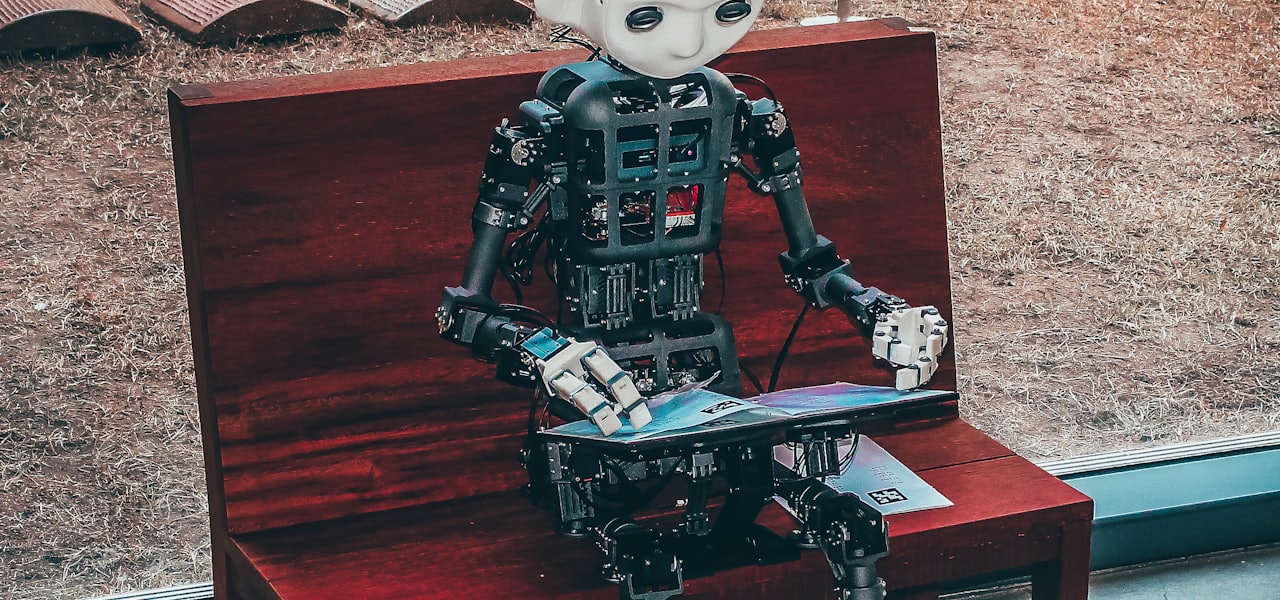
    Amaryllo Inc. is a multinational company founded in Amsterdam, the Netherlands, and now headquartered in the United States. It operates as a cloud service platform, providing cloud storage and cloud computing solutions to enterprises and brand companies. Amaryllo began with Skype IP camera development, pioneering biometric robotic technologies, encrypted P2P network, and secure cloud storage. Amaryllo was founded by Band of Angels member, Marcus Yang to develop patents for a new type of robotic cameras that is claimed to "talk, hear, sense, recognize human faces, and track intruders". It also claims to have made the world's first security robot based on the WebRTC protocol, Icam PRO FHD, and won the 2015 CES Best of Innovation Award under Embedded Technology category. Its home security robots claim to employ 256-bit encryption and run on the WebRTC protocol. Amaryllo products are sold in over 100 Countries across 6 Continents. == History == Amaryllo revealed its first smart home security products at Internationale Funkausstellung Berlin (IFA) 2013 with a Skype-enabled IP camera called iCam HD. Amaryllo announced its second Skype-certified smart home product, iBabi HD, at CES 2014. The company was chosen as a "Cool Vendor" by Gartner in Connected Home 2014. Amaryllo introduced WebRTC-based smart home products after Microsoft terminated embedded Skype services in mid 2014. Since then, Amaryllo has been developing camera robots with auto-tracking and facial recognition technologies. Its camera robots, ATOM AR3 and ATOM AR3S, were introduced in late 2016. It focuses on wired and wireless technology based on AI services. == Cloud Service Platform == Amaryllo offers prepaid cloud storage through digital codes and gift cards, distributed via InComm Payments, Blackhawk Network, and other partners. It provides high-performance cloud computing service through Rescale partnership. Amaryllo provides free cameras under an annual cloud storage subscription on its website. == Global Supercomputing Network (GSN) == The Global Supercomputing Network (GSN) is a distributed high-performance computing (HPC) platform developed by Amaryllo. The network is designed to provide scalable Infrastructure as a Service (IaaS) by connecting a global array of data centers to offer GPU computing resources for specialized industrial and scientific applications. === Architecture and Technology === GSN operates as a decentralized distributed network of servers rather than a single centralized supercomputer. The platform integrates an artificial intelligence assistant named Genie, also developed by Amaryllo. Genie's primary function is to manage computing allocation, helping users identify and connect to available resources across the network’s various nodes based on the specific requirements of their tasks. === Services === The network primarily focuses on the rental of GPU processing resources, catering to fields that require massive parallel processing capabilities, including: Artificial Intelligence and Machine Learning: Training large language models (LLMs) and neural networks. Scientific Simulations: Executing complex calculations in physics, chemistry, and bioinformatics. Data Analytics: Processing large-scale datasets. By utilizing a rental model, GSN allows organizations to access high-end hardware without the capital expenditure associated with purchasing and maintaining physical server infrastructure. === Infrastructure and Partnerships === The network’s physical footprint is expanded through strategic partnerships with data center operators. GSN collaborates with MettaDC and Cyber DC to provide colocation services. These partnerships facilitate the deployment of Nvidia server clusters within secure, Tier-rated facilities, ensuring high availability and connectivity for GSN users. == Official Brand Licensee of HP == Amaryllo Inc. is an official licensee of HP Inc., managing both B2B and B2C cloud services under the HP brand. Through this partnership, Amaryllo offers a range of secure and scalable cloud solutions, including HP Cloud, which provides subscription and one-time payment storage for reliable data backup and storage for individuals, families, and businesses. HP Cloud employs cloud computing technologies to create smart albums for users.

    Read more →
  • Scale space

    Scale space

    Scale-space theory is a framework for multi-scale signal representation developed by the computer vision, image processing and signal processing communities with complementary motivations from physics and biological vision. It is a formal theory for handling image structures at different scales, by representing an image as a one-parameter family of smoothed images, the scale-space representation, parametrized by the size of the smoothing kernel used for suppressing fine-scale structures. The parameter t {\displaystyle t} in this family is referred to as the scale parameter, with the interpretation that image structures of spatial size smaller than about t {\displaystyle {\sqrt {t}}} have largely been smoothed away in the scale-space level at scale t {\displaystyle t} . The main type of scale space is the linear (Gaussian) scale space, which has wide applicability as well as the attractive property of being possible to derive from a small set of scale-space axioms. The corresponding scale-space framework encompasses a theory for Gaussian derivative operators, which can be used as a basis for expressing a large class of visual operations for computerized systems that process visual information. This framework also allows visual operations to be made scale invariant, which is necessary for dealing with the size variations that may occur in image data, because real-world objects may be of different sizes and in addition the distance between the object and the camera may be unknown and may vary depending on the circumstances. == Definition == The notion of scale space applies to signals of arbitrary numbers of variables. The most common case in the literature applies to two-dimensional images, which is what is presented here. Consider a given image f {\displaystyle f} where f ( x , y ) {\displaystyle f(x,y)} is the greyscale value of the pixel at position ( x , y ) {\displaystyle (x,y)} . The linear (Gaussian) scale-space representation of f {\displaystyle f} is a family of derived signals L ( x , y ; t ) {\displaystyle L(x,y;t)} defined by the convolution of f ( x , y ) {\displaystyle f(x,y)} with the two-dimensional Gaussian kernel g ( x , y ; t ) = 1 2 π t e − ( x 2 + y 2 ) / 2 t {\displaystyle g(x,y;t)={\frac {1}{2\pi t}}e^{-(x^{2}+y^{2})/2t}\,} such that L ( ⋅ , ⋅ ; t ) = g ( ⋅ , ⋅ ; t ) ∗ f ( ⋅ , ⋅ ) , {\displaystyle L(\cdot ,\cdot ;t)\ =g(\cdot ,\cdot ;t)f(\cdot ,\cdot ),} where the semicolon in the argument of L {\displaystyle L} implies that the convolution is performed only over the variables x , y {\displaystyle x,y} , while the scale parameter t {\displaystyle t} after the semicolon just indicates which scale level is being defined. This definition of L {\displaystyle L} works for a continuum of scales t ≥ 0 {\displaystyle t\geq 0} , but typically only a finite discrete set of levels in the scale-space representation would be actually considered. The scale parameter t = σ 2 {\displaystyle t=\sigma ^{2}} is the variance of the Gaussian filter and as a limit for t = 0 {\displaystyle t=0} the filter g {\displaystyle g} becomes an impulse function such that L ( x , y ; 0 ) = f ( x , y ) , {\displaystyle L(x,y;0)=f(x,y),} that is, the scale-space representation at scale level t = 0 {\displaystyle t=0} is the image f {\displaystyle f} itself. As t {\displaystyle t} increases, L {\displaystyle L} is the result of smoothing f {\displaystyle f} with a larger and larger filter, thereby removing more and more of the details that the image contains. Since the standard deviation of the filter is σ = t {\displaystyle \sigma ={\sqrt {t}}} , details that are significantly smaller than this value are to a large extent removed from the image at scale parameter t {\displaystyle t} , see the following figures and for graphical illustrations. === Why a Gaussian filter? === When faced with the task of generating a multi-scale representation one may ask: could any filter g of low-pass type and with a parameter t which determines its width be used to generate a scale space? The answer is no, as it is of crucial importance that the smoothing filter does not introduce new spurious structures at coarse scales that do not correspond to simplifications of corresponding structures at finer scales. In the scale-space literature, a number of different ways have been expressed to formulate this criterion in precise mathematical terms. The conclusion from several different axiomatic derivations that have been presented is that the Gaussian scale space constitutes the canonical way to generate a linear scale space, based on the essential requirement that new structures must not be created when going from a fine scale to any coarser scale. Conditions, referred to as scale-space axioms, that have been used for deriving the uniqueness of the Gaussian kernel include linearity, shift invariance, semi-group structure, non-enhancement of local extrema, scale invariance and rotational invariance. In the works, the uniqueness claimed in the arguments based on scale invariance has been criticized, and alternative self-similar scale-space kernels have been proposed. The Gaussian kernel is, however, a unique choice according to the scale-space axiomatics based on causality or non-enhancement of local extrema. === Alternative definition === Equivalently, the scale-space family can be defined as the solution of the diffusion equation (for example in terms of the heat equation), ∂ t L = 1 2 ∇ 2 L , {\displaystyle \partial _{t}L={\frac {1}{2}}\nabla ^{2}L,} with initial condition L ( x , y ; 0 ) = f ( x , y ) {\displaystyle L(x,y;0)=f(x,y)} . This formulation of the scale-space representation L means that it is possible to interpret the intensity values of the image f as a "temperature distribution" in the image plane and that the process that generates the scale-space representation as a function of t corresponds to heat diffusion in the image plane over time t (assuming the thermal conductivity of the material equal to the arbitrarily chosen constant ⁠1/2⁠). Although this connection may appear superficial for a reader not familiar with differential equations, it is indeed the case that the main scale-space formulation in terms of non-enhancement of local extrema is expressed in terms of a sign condition on partial derivatives in the 2+1-D volume generated by the scale space, thus within the framework of partial differential equations. Furthermore, a detailed analysis of the discrete case shows that the diffusion equation provides a unifying link between continuous and discrete scale spaces, which also generalizes to nonlinear scale spaces, for example, using anisotropic diffusion. Hence, one may say that the primary way to generate a scale space is by the diffusion equation, and that the Gaussian kernel arises as the Green's function of this specific partial differential equation. == Motivations == The motivation for generating a scale-space representation of a given data set originates from the basic observation that real-world objects are composed of different structures at different scales. This implies that real-world objects, in contrast to idealized mathematical entities such as points or lines, may appear in different ways depending on the scale of observation. For example, the concept of a "tree" is appropriate at the scale of meters, while concepts such as leaves and molecules are more appropriate at finer scales. For a computer vision system analysing an unknown scene, there is no way to know a priori what scales are appropriate for describing the interesting structures in the image data. Hence, the only reasonable approach is to consider descriptions at multiple scales in order to be able to capture the unknown scale variations that may occur. Taken to the limit, a scale-space representation considers representations at all scales. Another motivation to the scale-space concept originates from the process of performing a physical measurement on real-world data. In order to extract any information from a measurement process, one has to apply operators of non-infinitesimal size to the data. In many branches of computer science and applied mathematics, the size of the measurement operator is disregarded in the theoretical modelling of a problem. The scale-space theory on the other hand explicitly incorporates the need for a non-infinitesimal size of the image operators as an integral part of any measurement as well as any other operation that depends on a real-world measurement. There is a close link between scale-space theory and biological vision. Many scale-space operations show a high degree of similarity with receptive field profiles recorded from the mammalian retina and the first stages in the visual cortex. In these respects, the scale-space framework can be seen as a theoretically well-founded paradigm for early vision, which in addition has been thoroughly tested by algorithms and experiments. == Gaussian derivatives == At any scale in scale space, we c

    Read more →
  • Ontology learning

    Ontology learning

    Ontology learning (ontology extraction, ontology augmentation generation, ontology generation, or ontology acquisition) is the automatic or semi-automatic creation of ontologies, including extracting the corresponding domain's terms and the relationships between the concepts that these terms represent from a corpus of natural language text, and encoding them with an ontology language for easy retrieval. As building ontologies manually is extremely labor-intensive and time-consuming, there is great motivation to automate the process. Typically, the process starts by extracting terms and concepts or noun phrases from plain text using linguistic processors such as part-of-speech tagging and phrase chunking. Then statistical or symbolic techniques are used to extract relation signatures, often based on pattern-based or definition-based hypernym extraction techniques. == Procedure == Ontology learning (OL) is used to (semi-)automatically extract whole ontologies from natural language text. The process is usually split into the following eight tasks, which are not all necessarily applied in every ontology learning system. === Domain terminology extraction === During the domain terminology extraction step, domain-specific terms are extracted, which are used in the following step (concept discovery) to derive concepts. Relevant terms can be determined, e.g., by calculation of the TF/IDF values or by application of the C-value / NC-value method. The resulting list of terms has to be filtered by a domain expert. In the subsequent step, similarly to coreference resolution in information extraction, the OL system determines synonyms, because they share the same meaning and therefore correspond to the same concept. The most common methods therefore are clustering and the application of statistical similarity measures. === Concept discovery === In the concept discovery step, terms are grouped to meaning bearing units, which correspond to an abstraction of the world and therefore to concepts. The grouped terms are these domain-specific terms and their synonyms, which were identified in the domain terminology extraction step. === Concept hierarchy derivation === In the concept hierarchy derivation step, the OL system tries to arrange the extracted concepts in a taxonomic structure. This is mostly achieved with unsupervised hierarchical clustering methods. Because the result of such methods is often noisy, a supervision step, e.g., user evaluation, is added. A further method for the derivation of a concept hierarchy exists in the usage of several patterns that should indicate a sub- or supersumption relationship. Patterns like “X, that is a Y” or “X is a Y” indicate that X is a subclass of Y. Such pattern can be analyzed efficiently, but they often occur too infrequently to extract enough sub- or supersumption relationships. Instead, bootstrapping methods are developed, which learn these patterns automatically and therefore ensure broader coverage. === Learning of non-taxonomic relations === In the learning of non-taxonomic relations step, relationships are extracted that do not express any sub- or supersumption. Such relationships are, e.g., works-for or located-in. There are two common approaches to solve this subtask. The first is based upon the extraction of anonymous associations, which are named appropriately in a second step. The second approach extracts verbs, which indicate a relationship between entities, represented by the surrounding words. The result of both approaches need to be evaluated by an ontologist to ensure accuracy. === Rule discovery === During rule discovery, axioms (formal description of concepts) are generated for the extracted concepts. This can be achieved, e.g., by analyzing the syntactic structure of a natural language definition and the application of transformation rules on the resulting dependency tree. The result of this process is a list of axioms, which, afterwards, is comprehended to a concept description. This output is then evaluated by an ontologist. === Ontology population === At this step, the ontology is augmented with instances of concepts and properties. For the augmentation with instances of concepts, methods based on the matching of lexico-syntactic patterns are used. Instances of properties are added through the application of bootstrapping methods, which collect relation tuples. === Concept hierarchy extension === In this step, the OL system tries to extend the taxonomic structure of an existing ontology with further concepts. This can be performed in a supervised manner with a trained classifier or in an unsupervised manner via the application of similarity measures. === Frame and Event detection === During frame/event detection, the OL system tries to extract complex relationships from text, e.g., who departed from where to what place and when. Approaches range from applying SVM with kernel methods to semantic role labeling (SRL) to deep semantic parsing techniques. == Tools == Dog4Dag (Dresden Ontology Generator for Directed Acyclic Graphs) is an ontology generation plugin for Protégé 4.1 and OBOEdit 2.1. It allows for term generation, sibling generation, definition generation, and relationship induction. Integrated into Protégé 4.1 and OBO-Edit 2.1, DOG4DAG allows ontology extension for all common ontology formats (e.g., OWL and OBO). Limited largely to EBI and Bio Portal lookup service extensions.

    Read more →
  • Digital image processing

    Digital image processing

    Digital image processing is the use of a digital computer to process digital images through an algorithm. As a subcategory or field of digital signal processing, digital image processing has many advantages over analog image processing. It allows a much wider range of algorithms to be applied to the input data and can avoid problems such as the build-up of noise and distortion during processing. Since images are defined over two dimensions (perhaps more), digital image processing may be modeled in the form of multidimensional systems. The generation and development of digital image processing are mainly affected by three factors: first, the development of computers; second, the development of mathematics (especially the creation and improvement of discrete mathematics theory); and third, the demand for a wide range of applications in environment, agriculture, military, industry and medical science has increased. == History == Many of the techniques of digital image processing, or digital picture processing as it often was called, were developed in the 1960s, at Bell Laboratories, the Jet Propulsion Laboratory, Massachusetts Institute of Technology, University of Maryland, and a few other research facilities, with application to satellite imagery, wire-photo standards conversion, medical imaging, videophone, character recognition, and photograph enhancement. The purpose of early image processing was to improve the quality of the image. In image processing, the input is a low-quality image, and the output is an image with improved quality. Common image processing includes image enhancement, restoration, encoding, and compression. The first successful application was the American Jet Propulsion Laboratory (JPL). They used image processing techniques such as geometric correction, gradation transformation, noise removal, etc. on the thousands of lunar photos sent back by the Space Detector Ranger 7 in 1964, taking into account the position of the Sun and the environment of the Moon. The impact of the successful mapping of the Moon's surface map by the computer has been a success. Later, more complex image processing was performed on the nearly 100,000 photos sent back by the spacecraft, so that the topographic map, color map and panoramic mosaic of the Moon were obtained, which achieved extraordinary results and laid a solid foundation for human landing on the Moon. The cost of processing was fairly high, however, with the computing equipment of that era. That changed in the 1970s, when digital image processing proliferated as cheaper computers and dedicated hardware became available. This led to images being processed in real-time, for some dedicated problems such as television standards conversion. As general-purpose computers became faster, they started to take over the role of dedicated hardware for all but the most specialized and computer-intensive operations. With the fast computers and signal processors available in the 2000s, digital image processing has become the most common form of image processing, and is generally used because it is not only the most versatile method, but also the cheapest. === Image sensors === The basis for modern image sensors is metal–oxide–semiconductor (MOS) technology, invented at Bell Labs between 1955 and 1960, This led to the development of digital semiconductor image sensors, including the charge-coupled device (CCD) and later the CMOS sensor. The charge-coupled device was invented by Willard S. Boyle and George E. Smith at Bell Labs in 1969. While researching MOS technology, they realized that an electric charge was the analogy of the magnetic bubble and that it could be stored on a tiny MOS capacitor. As it was fairly straightforward to fabricate a series of MOS capacitors in a row, they connected a suitable voltage to them so that the charge could be stepped along from one to the next. The CCD is a semiconductor circuit that was later used in the first digital video cameras for television broadcasting. The NMOS active-pixel sensor (APS) was invented by Olympus in Japan during the mid-1980s. This was enabled by advances in MOS semiconductor device fabrication, with MOSFET scaling reaching smaller micron and then sub-micron levels. The NMOS APS was fabricated by Tsutomu Nakamura's team at Olympus in 1985. The CMOS active-pixel sensor (CMOS sensor) was later developed by Eric Fossum's team at the NASA Jet Propulsion Laboratory in 1993. By 2007, sales of CMOS sensors had surpassed CCD sensors. MOS image sensors are widely used in optical mouse technology. The first optical mouse, invented by Richard F. Lyon at Xerox in 1980, used a 5 μm NMOS integrated circuit sensor chip. Since the first commercial optical mouse, the IntelliMouse introduced in 1999, most optical mouse devices use CMOS sensors. === Image compression === An important development in digital image compression technology was the discrete cosine transform (DCT), a lossy compression technique first proposed by Nasir Ahmed in 1972. DCT compression became the basis for JPEG, which was introduced by the Joint Photographic Experts Group in 1992. JPEG compresses images down to much smaller file sizes, and has become the most widely used image file format on the Internet. Its highly efficient DCT compression algorithm was largely responsible for the wide proliferation of digital images and digital photos, with several billion JPEG images produced every day as of 2015. Medical imaging techniques produce very large amounts of data, especially from CT, MRI and PET modalities. As a result, storage and communications of electronic image data are prohibitive without the use of compression. JPEG 2000 image compression is used by the DICOM standard for storage and transmission of medical images. The cost and feasibility of accessing large image data sets over low or various bandwidths are further addressed by use of another DICOM standard, called JPIP, to enable efficient streaming of the JPEG 2000 compressed image data. === Digital signal processor (DSP) === Electronic signal processing was revolutionized by the wide adoption of MOS technology in the 1970s. MOS integrated circuit technology was the basis for the first single-chip microprocessors and microcontrollers in the early 1970s, and then the first single-chip digital signal processor (DSP) chips in the late 1970s. DSP chips have since been widely used in digital image processing. The discrete cosine transform (DCT) image compression algorithm has been widely implemented in DSP chips, with many companies developing DSP chips based on DCT technology. DCTs are widely used for encoding, decoding, video coding, audio coding, multiplexing, control signals, signaling, analog-to-digital conversion, formatting luminance and color differences, and color formats such as YUV444 and YUV411. DCTs are also used for encoding operations such as motion estimation, motion compensation, inter-frame prediction, quantization, perceptual weighting, entropy encoding, variable encoding, and motion vectors, and decoding operations such as the inverse operation between different color formats (YIQ, YUV and RGB) for display purposes. DCTs are also commonly used for high-definition television (HDTV) encoder/decoder chips. == Tasks == Digital image processing allows the use of much more complex algorithms, and hence, can offer both more sophisticated performance at simple tasks, and the implementation of methods which would be impossible by analogue means. In particular, digital image processing is a concrete application of, and a practical technology based on: Classification Feature extraction Multi-scale signal analysis Pattern recognition Projection Some techniques that are used in digital image processing include: Anisotropic diffusion Hidden Markov models Image editing Image restoration Independent component analysis Linear filtering Neural networks Partial differential equations Pixelation Point feature matching Principal components analysis Self-organizing maps Wavelets == Digital image transformations == === Filtering === Digital filters are used to blur and sharpen digital images. Filtering can be performed by: convolution with specifically designed kernels (filter array) in the spatial domain masking specific frequency regions in the frequency (Fourier) domain The following examples show both methods: ==== Image padding in Fourier domain filtering ==== Images are typically padded before being transformed to the Fourier space, the highpass filtered images below illustrate the consequences of different padding techniques: Notice that the highpass filter shows extra edges when zero padded compared to the repeated edge padding. ==== Filtering code examples ==== MATLAB example for spatial domain highpass filtering. === Affine transformations === Affine transformations enable basic image transformations including scale, rotate, translate, mirror and shear as is shown in the following examples: To apply the affine

    Read more →
  • AI Overviews

    AI Overviews

    AI Overviews is an artificial intelligence (AI) feature integrated into Google Search that produces AI-generated summaries of search results. The feature has been criticized for its inaccuracy and for reducing website traffic. == History and development == AI Overviews were first introduced as part of Google's Search Generative Experience (SGE), which was unveiled at the Google I/O conference in May 2023. In May 2024 at Google I/O 2024, the feature was rebranded as AI Overviews and launched in the United States. The introduction of AI Overviews was seen as a strategic move to compete with other generative AI advancements, including OpenAI's ChatGPT. By August 2024, AI Overviews was rolled out to several other countries, including the United Kingdom, India, Japan, Brazil, Mexico, and Indonesia, with support for multiple languages. In October 2024, Google expanded the feature globally, making it available in over 100 countries. In December 2024, Botify x Demandsphere released findings stating that when AI Overviews and featured snippets appear together on the search engine results page, they take up approximately 67.1% of the screen on desktop and 75.7% on mobile. Even if content is ranking in the #1 position, it may not be visible to consumers if other visual elements on the results page are more prominent. In March 2025, Google started testing an "AI Mode", where the search results page is AI-generated. The company was also considering adding advertisements to the AI Mode, as they already exist in AI Overviews. As of May 2025, AI Overviews are available in over 200 countries and territories and in more than 40 languages. As of March 2026, Google AI Overviews appear on more than 48% of total Google Search queries, compared to just 6.49% in the previous year (58% year-over-year growth). == Functionality == The AI Overviews feature uses large language models to generate summaries from web content. The overviews are designed to be concise, providing a snapshot of relevant information about the queried topic. Google allows users to adjust the language complexity in summaries, offering both simplified and detailed options. The overviews also include links to sources. According to a June 2025 study by Semrush, the most cited source is Quora, followed by Reddit. == Reception == The feature has faced criticism for inaccuracies, including instances where erroneous or nonsensical content was generated. Depending on what is searched for, the overview may also consist of hallucinated content, such as when searching for idioms that do not exist. In May 2024, Google temporarily restricted the AI tool after it provided suggestions that were seen as nonsensical and harmful, such as telling users to eat rocks or apply glue on pizza. Concerns were also raised by content publishers, who feared a decline in web traffic as users relied on the summaries instead of visiting source websites. A Google patent from 2026 raised the concern of webmasters that Google could entirely replace the landing page of websites by an AI optimized copy of the website in its results. There is also apprehension about the ethical implications of AI-driven content aggregation, including its impact on intellectual property rights and the visibility of smaller content providers. The European Commission announced in December 2025 that they were investigating whether AI Overviews breached European competition law. In response, Google has stated its commitment to improve content validation and refine the algorithms used to filter unreliable information. Google implemented measures to prioritize link placement within AI Overviews, aiming to balance user convenience with the needs of content creators. In January 2026, Google restricted AI Overviews on certain health-related searches following an investigation by The Guardian. == Lawsuits == On February 24, 2025, Chegg sued Alphabet over the AI Overviews feature, claiming that it was leading to students preferring "low-quality, unverified AI summaries", thus violating antitrust law. Chegg also said it was considering either a sale or a take-private transaction. In September 2025, Penske Media Corporation, the publisher of Rolling Stone and The Hollywood Reporter, sued Google, claiming that AI Overviews illegally regurgitate content from their websites and drive off potential site visitors by always appearing on top of the search results while leaving little incentive to see the linked sources. The company stated that "the future of digital media and [...] its integrity [...] is threatened by Google's current actions", alleging that 20% of searches that link to Penske-owned websites show AI Overviews and that the figure is expected to rise. Google spokesperson José Castañeda called the claims "meritless" and stated that "AI Overviews send traffic to a greater diversity of sites." In 2026, Canadian musician Ashley MacIsaac filed a lawsuit against Google claiming that the AI Overview feature had wrongly stated that MacIsaac had been convicted of numerous criminal offences and was on the sex offender registry. He claims this incorrect information led to the cancellation of a December 2025 gig organized by the Sipekne'katik First Nation.

    Read more →
  • VACUUM

    VACUUM

    VACUUM is a set of normative guidance principles for achieving training and test dataset quality for structured datasets in data science and machine learning. The garbage-in, garbage out principle motivates a solution to the problem of data quality but does not offer a specific solution. Unlike the majority of the ad-hoc data quality assessment metrics often used by practitioners VACUUM specifies qualitative principles for data quality management and serves as a basis for defining more detailed quantitative metrics of data quality. VACUUM is an acronym that stands for: valid accurate consistent uniform unified model

    Read more →
  • Pandorabots

    Pandorabots

    Pandorabots, Inc. is an artificial intelligence company that runs a web service for building and deploying chatbots. Pandorabots implements and supports development of the Artificial Intelligence Markup Language and makes portions of its code accessible for free. The Pandorabots Platform is "one of the oldest and largest chatbot hosting services in the world", allowing creation of virtual agents to hold human-like text or voice chats with consumers. The platform is written in Allegro Common LISP. == Use Cases == Common use cases include advertising, virtual assistance, e-learning, entertainment and education. The platform has also been used by academics and universities use the platform for teaching and research.

    Read more →